
State Law
Oregon
Oregon breastfeeding laws and lactation protections, including workplace accommodations and public breastfeeding rights.
Oregon is a breastfeeding-positive state thanks to state laws that provide workplace lactation protections. In addition to the federal FLSA’s PUMP Act that provides workplace lactation accommodation protections for all breastfeeding employees, Oregon’s laws provide an additional level of support.
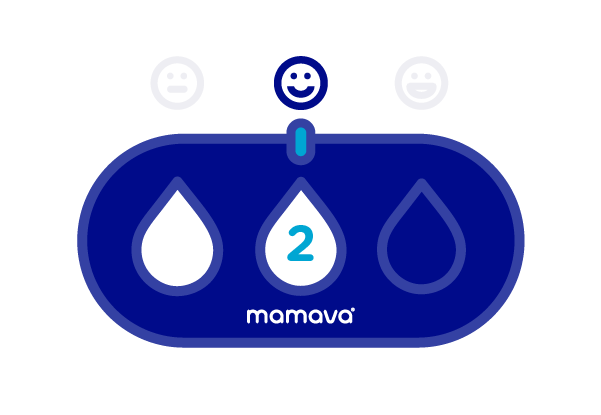
We’ve awarded Oregon two drops on our scale.
OR Breastfeeding Laws: In Public
Mothers in Oregon have the right to breastfeed in public. Read the law: Or. Rev. Stat. § 109.001 (1999)
OR Breastfeeding Laws: At Work
All breastfeeding employees are protected by the federal FLSA’s PUMP for Nursing Mothers Act and entitled to reasonable break time and a private space (other than a bathroom) to pump at work for one year. But Oregon also has a robust lactation accommodation law. All employers in Oregon are required to support breastfeeding employees by providing break time and a space (other than a bathroom) to pump at work. Oregon law clarifies that employers must provide a “reasonable rest period” every time the employee needs to pump (the law used to stipulate a fixed amount of time). Employers with fewer than 10 employees may request an exemption if they can prove “undue hardship.” Read the law: OR 653.077 and the amendment: HB 2593
OR Breastfeeding Information + Resources
Breastfeeding mothers are exempt from jury duty upon request.
The Central Oregon Breastfeeding Coalition’s mission is to “improve communication and coordination of breastfeeding support services to better educate, promote, and support breastfeeding.” Visit here.
Visit U.S. Breastfeeding Committee for a full list of state breastfeeding coalitions.
Breastfeeding Law Rating Key
One drop: There is no state-level workplace lactation legislation beyond the PUMP Act.
Two drops: State law exceeds the PUMP Act in one of the following ways: 1) Lower threshold for employer exemption; 2) Workplace protections beyond one year; 3) Requirements for lactation spaces (e.g. electrical outlets); 4) Protections for specific populations other than employees (e.g. students).
Three drops: State law exceeds the PUMP Act in at least two of the following ways: 1) Lower threshold for employer exemption; 2) workplace protections beyond one year; 3) requirements for lactation spaces (e.g. electrical outlets); 4) protections for specific populations other than employees (e.g. students).
Disclaimer: Please consult a professional for legal advice. Our information on breastfeeding laws is not a substitute for legal counsel.
our pods
Explore Our Lactation Pods
Freestanding lactation spaces that meet the requirements on this page, wherever you need to put one.

Mamava XL
Wheelchair-accessible lactation pod for public spaces and workplaces.
- Area
- 50 sq ft
- Dimensions
- 9'3" W x 5'6" D x 7'7" H
- Weight
- 700 lb
- Access
- Smart Access
- Assembly
- About 4 hours, no hardwiring required
- Mobility
- Retractable caster wheels for relocation
- Accessibility
- ADA compatible, no ramp needed

Mamava Flex
Versatile, all-in-one lactation pod for workplaces and public spaces.
- Area
- 24 sq ft
- Dimensions
- 6'7" W x 3'8" D x 7'9" H
- Weight
- 415 lb
- Access
- Smart Access technology
- Assembly
- About 2 hours
- Mobility
- Retractable caster wheels for relocation

Mamava Solo
Comfortably compact lactation pod designed for workplaces.
- Area
- 16 sq ft
- Dimensions
- 4' W x 4' D x 7'9" H
- Weight
- 300 lb
- Access
- Smart Access or tech-free options
- Assembly
- Under 2 hours
- Mobility
- Retractable caster wheels for relocation

Mamava Slide
Sliding-door lactation pod for easy placement in any space.
- Area
- 14 sq ft
- Dimensions
- 4' W x 3'7" D x 7'4" H
- Weight
- 550 lb
- Access
- Manual access
- Assembly
- Under 3 hours
- Mobility
- Glide feet for relocation
laws + compliance
Browse Lactation and Breastfeeding Laws by State
Pick a letter to jump to a state.
Filter By:
-
Read More
- State Law
Georgia
Georgia breastfeeding laws and lactation protections, including workplace accommodations and public breastfeeding rights.
-
Read More
- State Law
Hawaii
Hawaii breastfeeding laws and lactation protections, including workplace accommodations and public breastfeeding rights.
-
Read More
- State Law
Idaho
Idaho breastfeeding laws and lactation protections, including workplace accommodations and public breastfeeding rights.
-
Read More
- State Law
Illinois
Illinois breastfeeding laws and lactation protections, including workplace accommodations and public breastfeeding rights.
-
Read More
- State Law
Indiana
Indiana breastfeeding laws and lactation protections, including workplace accommodations and public breastfeeding rights.
-
Read More
- State Law
Iowa
Iowa breastfeeding laws and lactation protections, including workplace accommodations and public breastfeeding rights.
-
Read More
- State Law
Kansas
Kansas breastfeeding laws and lactation protections, including workplace accommodations and public breastfeeding rights.
-
Read More
- State Law
Kentucky
Kentucky breastfeeding laws and lactation protections, including workplace accommodations and public breastfeeding rights.
-
Read More
- State Law
Louisiana
Louisiana breastfeeding laws and lactation protections, including workplace accommodations and public breastfeeding rights.